I have been working on a program for civil engineers.

I have been working on a program for civil engineers.
Woah, that looks impressive! It looks like you can even analyse stresses and suchlike in the designed structure!
I’m curious, if I may: What GUI system are you using there? Is it just DirectGUI, or are you using something else (e.g. Qt)?
Thanks. Yes it is for analysing stresses.
I am using tkinter for the GUI.
Ah, tkinter! Interesting, and thank you for the answer! 
I did this, for fun, and it works. What do you think? I never make before a video for youtube, hope you enjoy it

That looks rather well done! Indeed, you have an impressive amount implemented there, it seems!
Also, I love that you can actually throw the dart, and that the fish respond to being fed!
The fish are hungry! You can throw all physical objects, darts have sticky attribute enabled. It’s true, there seem to be many different implementations, but once everything comes together you really see the potential. There are also other secondary mechanics that I didn’t record in the video, maybe I’ll do a devlog 2 
I’ve uploaded a new video about the building system, map procedural generation and manipulation, also some of asset manager and command console

Some very nice submissions of work in progress here! It’s great to see the engine being leveraged to such a degree.
Lately I’ve been experimenting with “crop instancing”, a task that has long been on my list of things to re-implement. That is to say, I’ve wanted to implement a speedy way of representing arbitrary numbers of plants in a relatively realistic way. This is more difficult than it might seem, as plant models can be fairly vertex-heavy if one is going for realism.
Here are a few screencaps of a recent build, which does run in real-time in Panda3D.
The plant models are a mix of Sketchfab models, custom models, and procedural generation. Some textures were sourced from ambientcg.
I have integrated a simple multiplayer mod to my game.
yes Simulan, handling huge amounts of models is a challenge. I had to struggle with it for a bit before getting something. This is a test instancing with a UH_static ShaderBuffer 20k low-poly LodNode models, I’ve split the transforms into a grid and custom bounding boxes, on this entry-level hardware it runs pretty well considering OBS and other tasks but it’s far from optimized
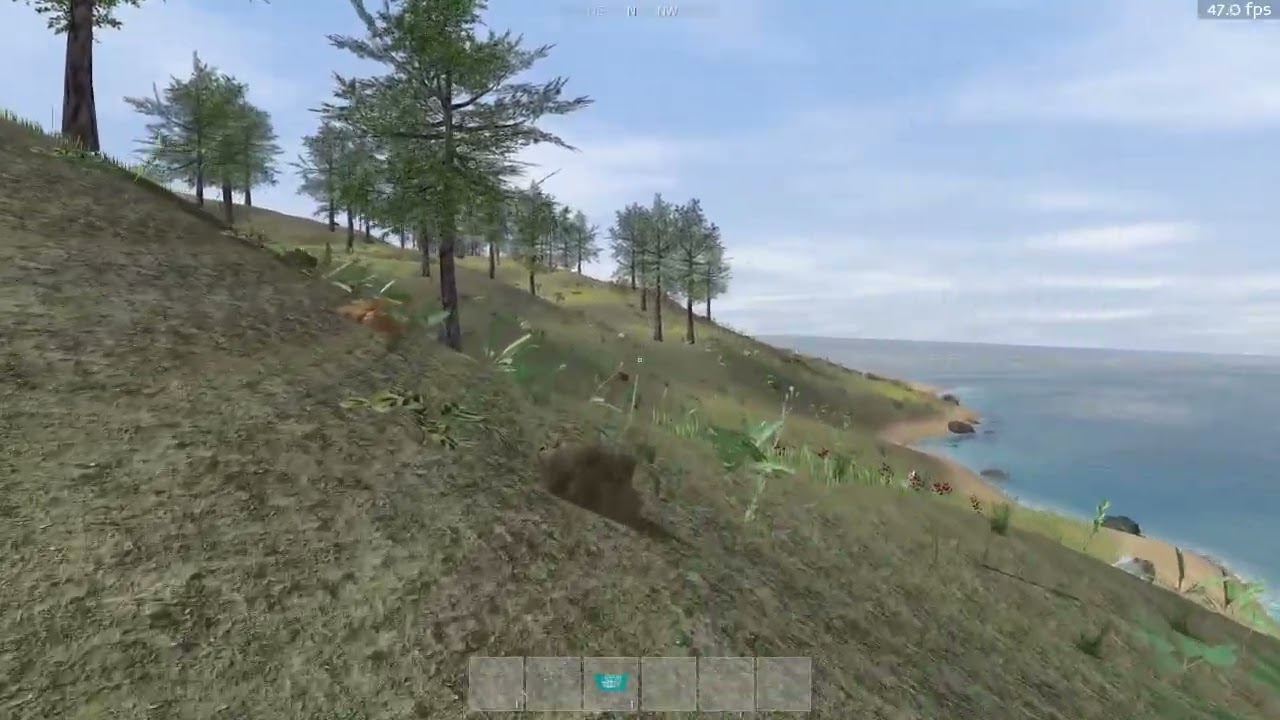
The building mechanics are looking really solid–but I love that you can actually raise and lower the level of the ground! I was expecting the terrain to be a simple, static mesh, but no! It’s actually alterable!
I do always like to see a good foliage-system in place, and these are looking the part!
Ah, I’ll confess, I’m tempted once again to return to the project that I had in mind when I first picked up Panda3D, which would have taken place in a forest…
(I don’t mean to do so right now–but I am tempted!)
The terrain is a ShaderTerrainMesh, so you can modify and set a RAM heightmap image 
Since you like foliage systems I’ll show you my latest test with more than 30K models and my new procedural trees class. I’m trying to optimize the shader pipeline to squeeze out more fps. Ah… you can see how the terrain’s physical mesh changes, not just the visual one

After experimenting with GPU instancing, I decided to move on to some networking. I was curious to see how the framework would perform over the network. At first I considered using DC, but for my simple use case it felt a bit too complex.
Instead, I prototyped a custom hybrid TCP/UDP server/client class in Python, and some RPC calls designed to integrate well with my inventory, building, and asset management systems. The approach loosely follows a server-authoritative model with physics ownership synchronization.
There is still a lot to test and refine, but for now this is the current result:
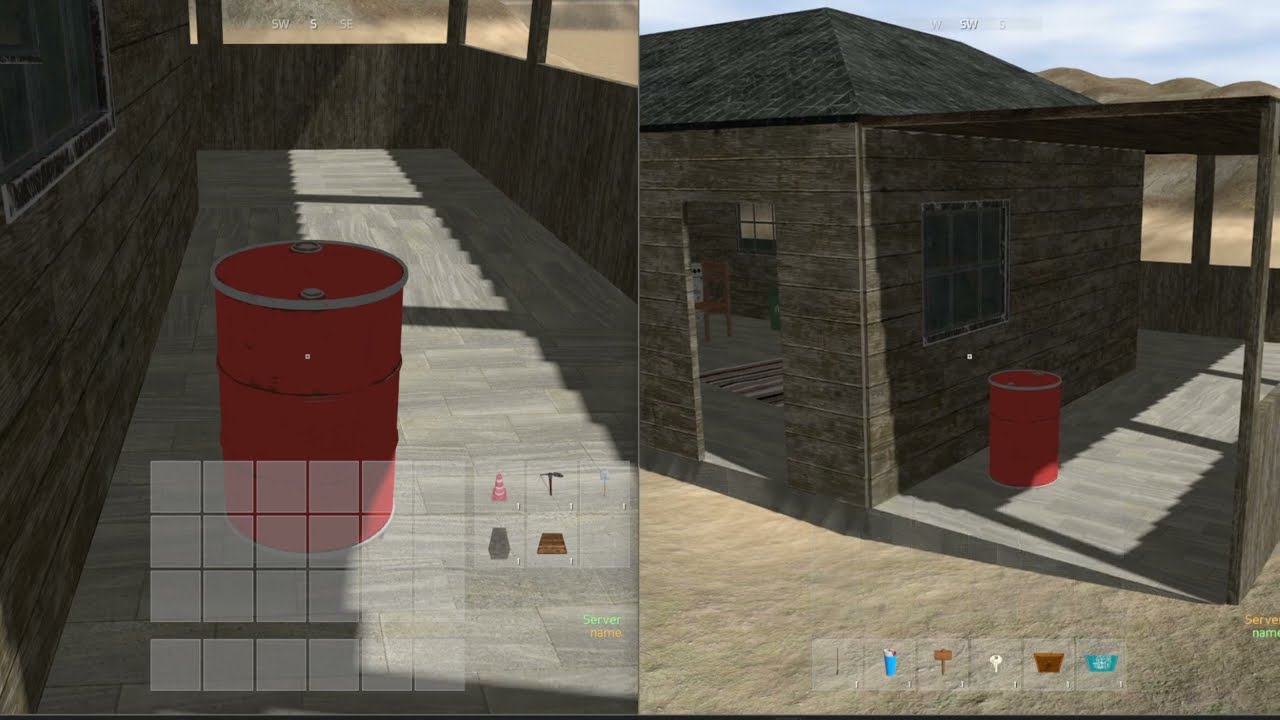
That is very nicely done, by the looks of things!
I don’t want to spam this thread, but I had to share this very first (and slightly clumsy) LAN gameplay attempt with a friend. I set the network sync to 20 Hz and it seems not bad at all on a local network. And somehow no criticalbugs… which is suspicious lol
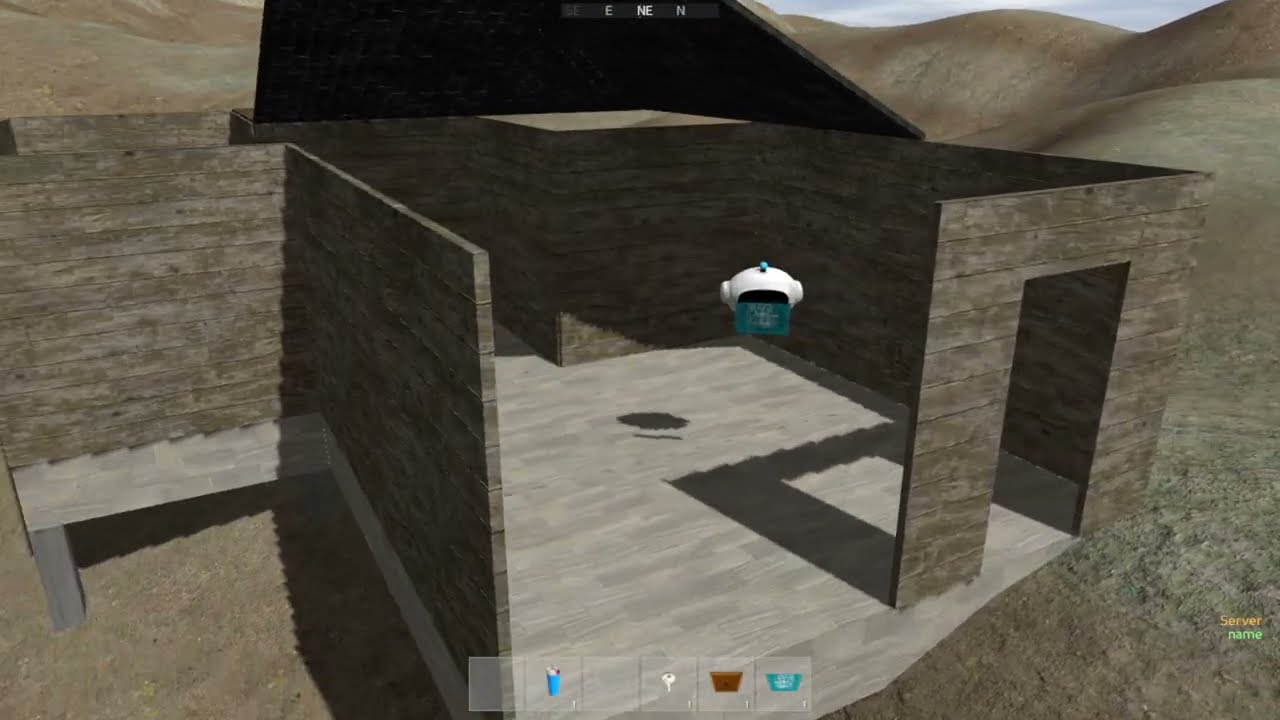
Very nice! And I like that the players appear to be little floating robots–that’s cute!
I’ve started a little visual-novel/gamebook side-project, and while I have a basis for the game itself in an old NaNoRenO project of mine, I was a little unsure as to how to plot out a sprawling, branching narrative.
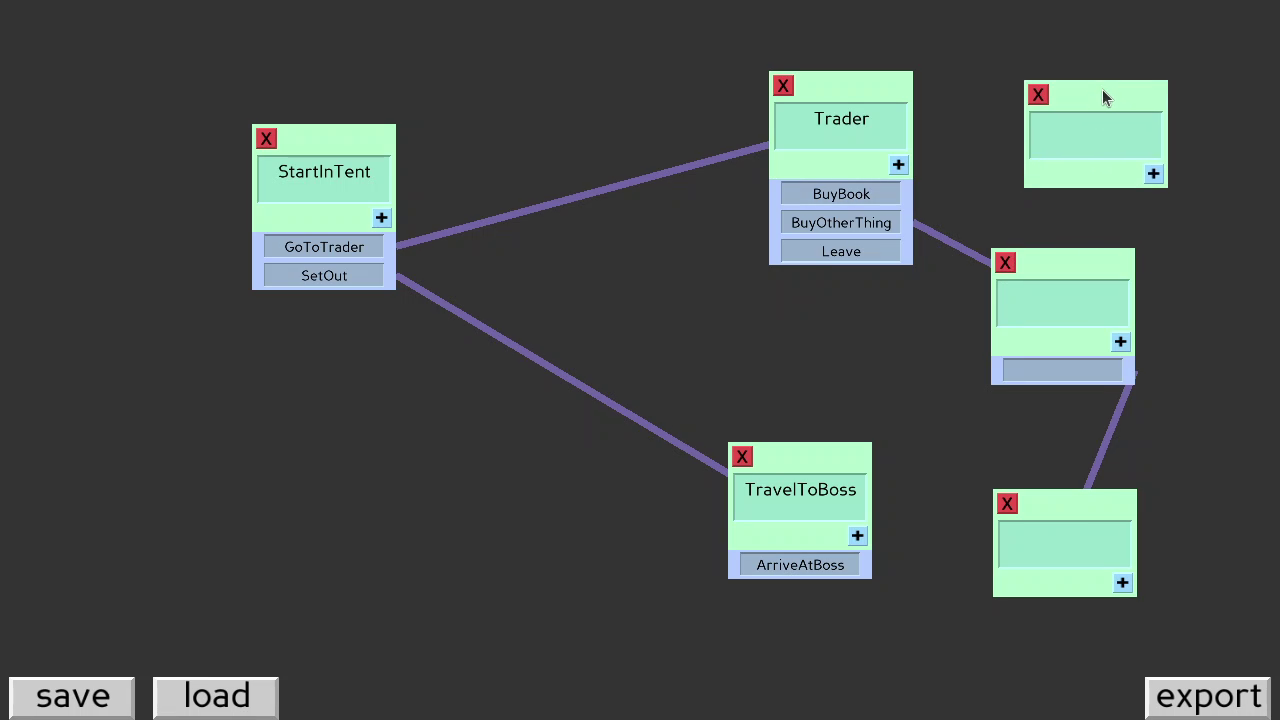
So, last night I began making a little editor for the purpose!
(And yes, I probably could have used Twine. But this way I know how to write an exportation routine appropriate to my game-framework! Plus, I had fun doing it. ^_^)
See the following BlueSky post for a video, showing the current features!
But if you don’t want to click through, here’s a still-frame:
(Apologies for asking you to go through to a social media post, but I can’t upload videos directly here, and didn’t want to upload to YouTube just to post here. ^^; )
A little more progress in the same project:
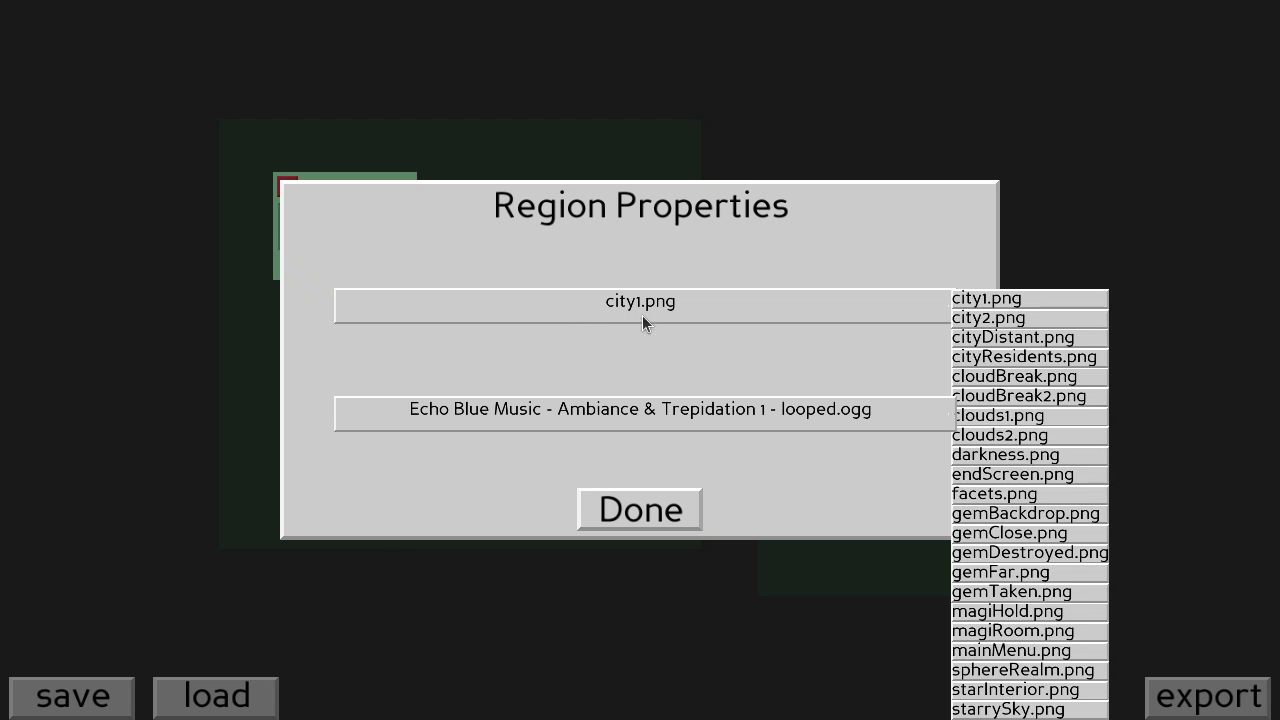
The editor now allows one (via mouse-dragging) to set rectangular “regions” for the purpose of setting backdrops and music. Specifically, clicking within a frame opens a dialogue that contains menus listing the available backdrops and music-files.
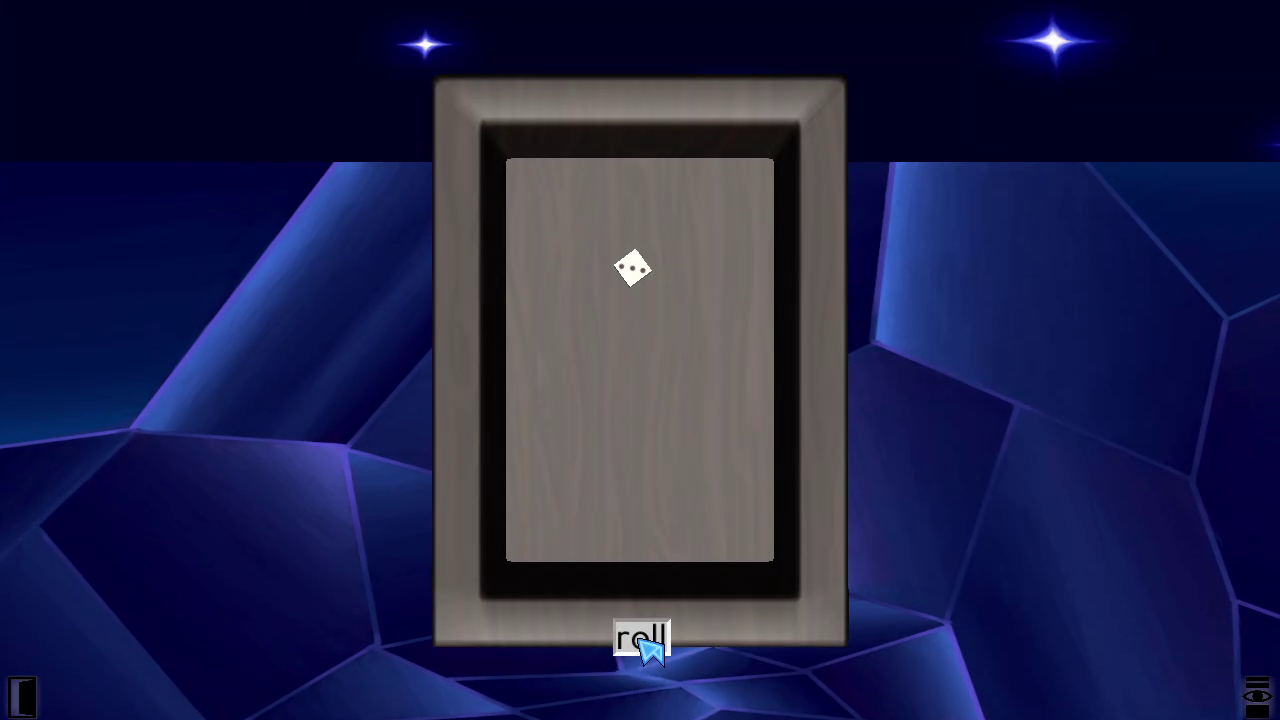
I’ve also been working on gameplay; see below a little dice-based minigame that simulates “climbing”: The player is tasked with succeeding (rolling a three or higher) three times in a row to “reach the top”. Failure drops them back to the bottom. (And is intended to hurt them when health is implemented.)
And again, screenshots from the above for those who prefer to not click through:
(Although you miss out on seeing the elements in action, of course.)