I’m not here to promote AI or any of that jazz or the editor or anything really. Simply here to share something that I feel has some worth in some areas as this is more the things I feel AI is good for to some extend. But more over that the whole project was about pushing my agent setup and and all that jazz. This was not a one prompt wonder it took many iterations over a few days/week. Nor is it perfect in anyway… I mean we have all worked with AI by now.
But many parts work really good and some work okay and some meh. I will probably not maintain this as it was not really the scope of the project to actually maintain the editor aswell. But I do find it interesting enough to maybe continue the agentic way. Maybe others will…
Hey Mj, good to see you back here! And welcome to the “I made my own editor” club
It does looks nice and modern I have to say. Too bad it’s not fully working on Linux though so I couldn’t fully test it but from what I saw so far it looks promising. I might even take some inspiration from the various views it has and integrate some of it into my own Editor.
As for the agentic approach, it would be interesting to see how well it could actually build a game since, that would make the editor kind of obsolete if you want to proceed in that direction.
Thanks - Yep “I made my own editorsssss” club you mean
But yeah that was a fun experiment. I was impressed by how well pywebview worked for this.
From all the little prototypes I made in the editor it handled it pretty good, simple physics stuff.
I also tried heavy scenes like that Sponza Base Scene which worked fine I guess. Didn’t really spend that much effort on the pbr stuff. As I don’t know know that stuff… its magic.
Load times were urgg bad…
I really liked the main workspace/page/screen the level editor/script editor. For what it gave me and allowed me todo, is pretty cool. That was something I would have loved to have back in the day. In a few clicks having a physics scene and a character controller with the option to just edit things in the scene is pretty cool for me just to play around.
What issues did you have in Linux? I’ll setup env for it there and I can make some adjustments I really don’t mind for the sake of testing.
As for the agentic approach, it would be interesting to see how well it could actually build a game since, that would make the editor kind of obsolete if you want to proceed in that direction.
By that I meant using a agent to continue development on the editor itself. Not that the editor was built for an Agent to be used to create 3D games.
But yes I find that interesting as well. The other thing is in this case with the editor the agent wrote all the examples for it. Some work good some not so good.
It wrote everything from scratch to “finish” (the current state)
The workspace page design is definitely adding to the modern feel, even if some of them felt a bit too crowded, too busy. That might be just my preference for having clean and simple interfaces though. Also, since I had no idea how things are actually used and connected in the editor and I haven’t had many assets at hand, I just browsed through it but not have made use of much of it. Anyway, these were a the few issues I had to solve to even make it that far.
The first glaring one was, that the requirements file didn’t install all dependencies. If I started it, it nagged about not finding GTK or Qt. I tried GTK first but since that required a few more hoops to jump through, I switched to Qt which in the end was able to create the window. I guess it’s mainly for drawing the main window and some of the UI elements like scrollbars maybe?
Afterwards, the next and probably main issue is, that the Panda3D window integration is not working like that on Linux using Wayland. It might work with older x11 interfaces but haven’t tried that. So the frame with the actual Panda3D window content stayed empty.
I had the same problem when I ported my FRAME editor to Qt. In the end I had to let panda do offscreen rendering and put the resulting rendered image on a Qt widget. Same should work for pretty much any other toolkit.
Additionally, since Panda isn’t handling the window drawing anymore, I also had to connect the user input and some other events to it manually. I have created a helper class for my FRAME Qt refactoring which I plan to publish very soon.
Now I also see where you wanted to go with that agentic approach. If it’d be good enough at managing the maintenance, that’d probably less work for you and gives more time for the actual fun part of making games. But time will probably tell how good AI will be at keeping up that work.
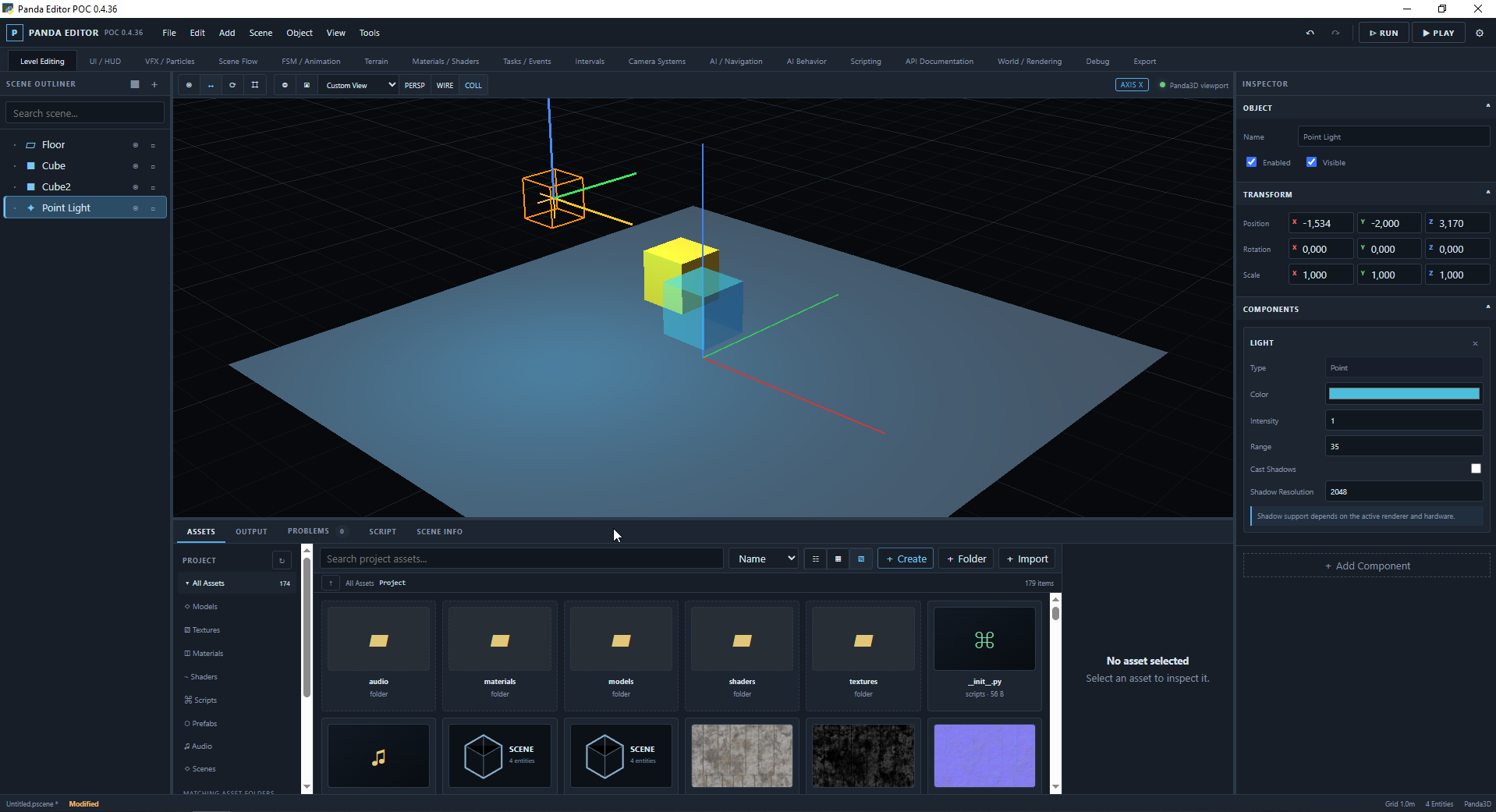
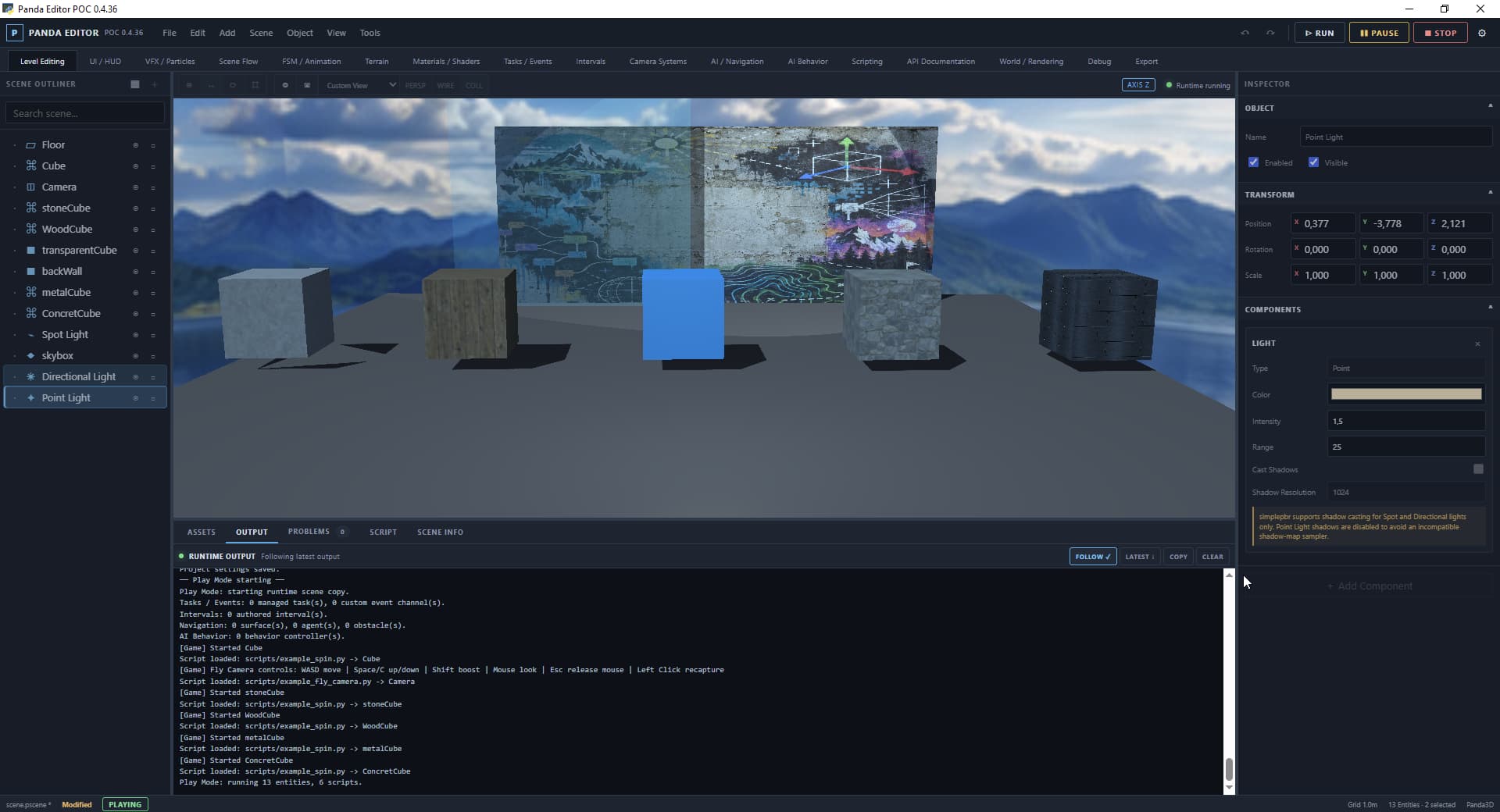
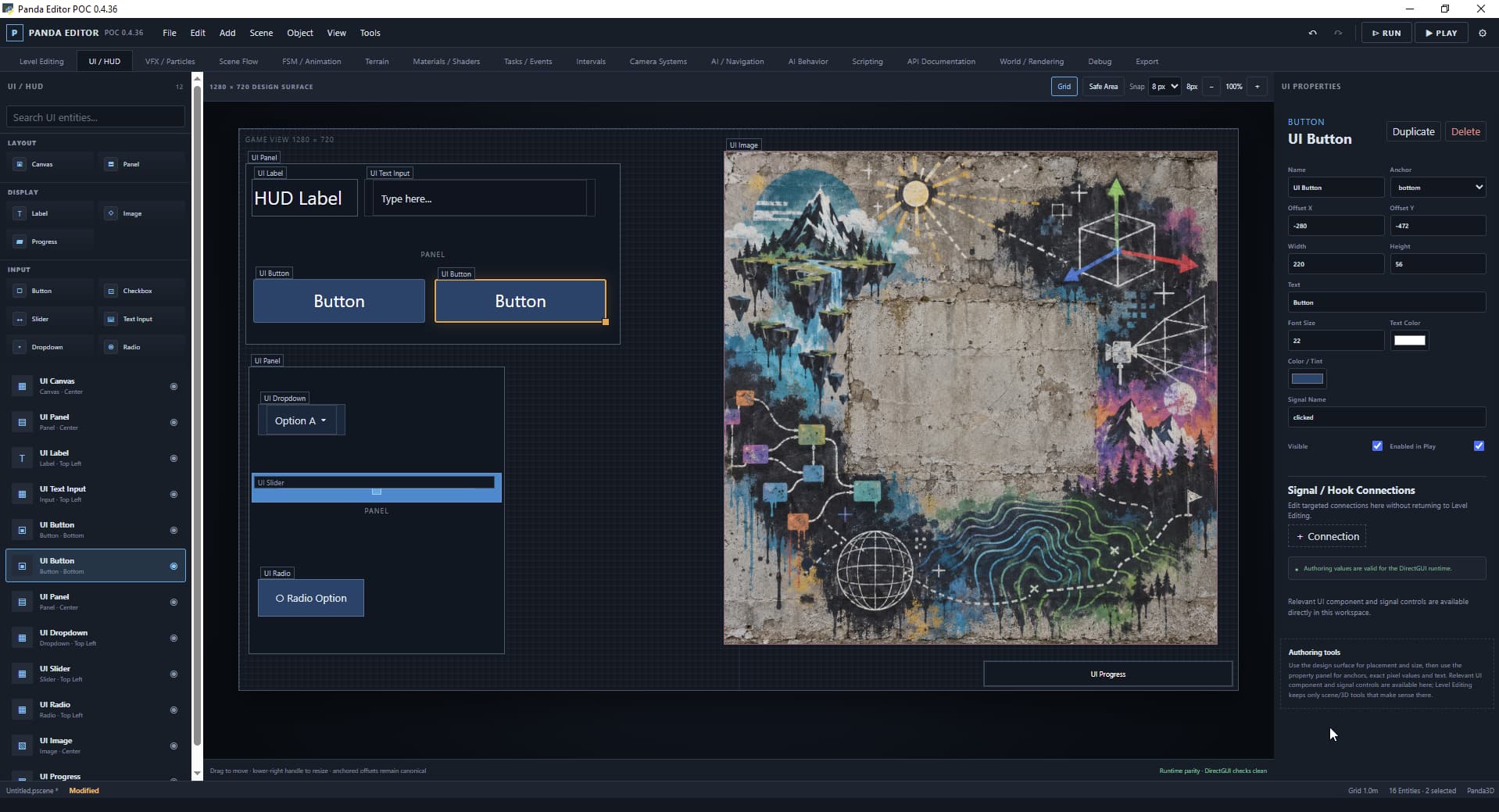
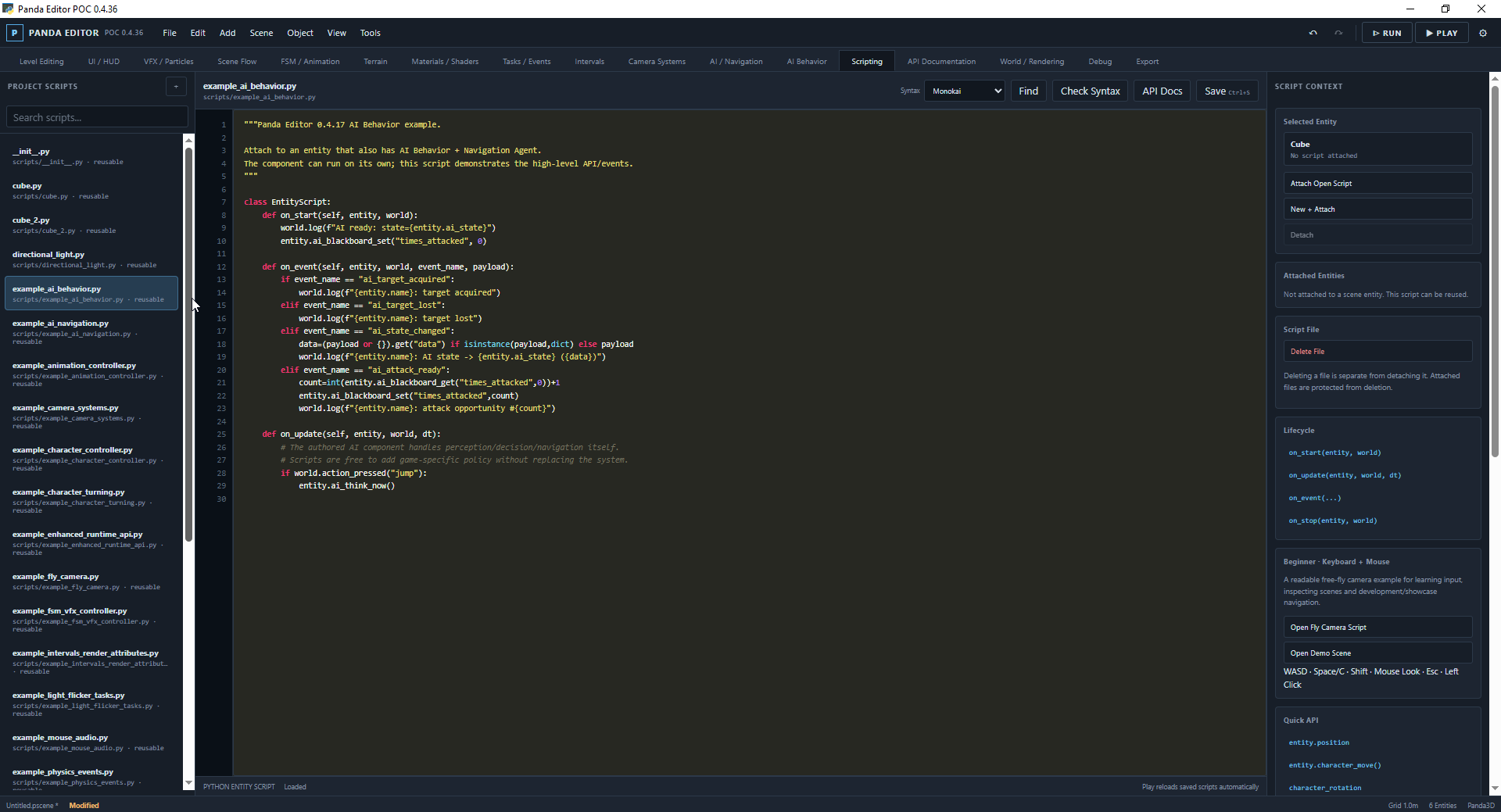
 I also think the model did a good job, I had to guide it “forcefully” at times but I’m honestly amazed where we are at these days.

 - Yep “I made my own editorsssss” club you mean
